For decades, Kohler was known for one thing: premium bathroom design. Sinks, tubs, faucets, and toilets positioned the company as a leader in the luxury fixture category.
Today, Kohler is operating in a very different space.
The company has steadily transformed itself into a home wellness platform, expanding beyond traditional fixtures into recovery, relaxation, and restorative health experiences that live inside the home.
The timing aligns with a major shift in consumer behavior. The global wellness economy reached roughly $6.8 trillion in 2025 and is projected to approach $9.8 trillion by 2029. Within that, home environments are becoming one of the fastest growing venues for wellness activity. Consumers increasingly want the benefits of spas, recovery studios, and mindfulness spaces integrated directly into their homes.
In the United States, wellness spending exceeds $480 billion annually, and a growing share of that spending is flowing into products and environments that support everyday well-being. Bathrooms, bedrooms, kitchens, and outdoor spaces are being reimagined as places where consumers can recharge physically and mentally.
Kohler recognized this shift earlier than most companies in the home category. Instead of simply expanding its product assortment, the company began building a strategy centered on wellness experiences.
The result is one of the most interesting brand transformations happening in the home sector.
Reframing the Bathroom as a Wellness Destination
Kohler’s strategic shift began with a change in perspective.
Historically, the bathroom industry focused on fixtures and functional performance. Kohler instead started to think about the rituals that occur in the space. Daily showers, baths, and personal care routines became the starting point for innovation.
This repositioning allowed the company to frame the bathroom as a place where consumers reset, recover, and decompress at the beginning and end of each day.

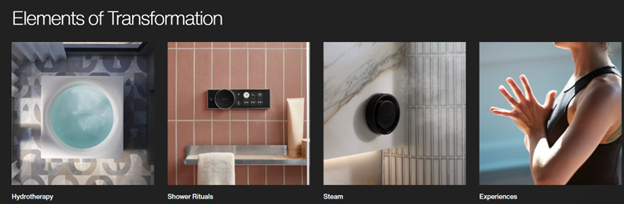
The product strategy followed naturally. Kohler began introducing technologies and environments designed to enhance those wellness rituals. Showers incorporated chromatherapy (= color therapy) lighting and aromatherapy features. Smart bath systems delivered hydrotherapy experiences. Steam systems allowed homeowners to recreate spa-like recovery sessions inside their own homes.
In other words, Kohler stopped selling plumbing products and began designing wellness experiences built around water.
This shift opened the door to a much larger strategic opportunity.
Strategic Expansion Through Acquisitions and Partnerships
Kohler’s transformation did not happen through internal product development alone. The company expanded its capabilities through a series of strategic moves that gradually built a broader wellness ecosystem.
One of the most important steps was the acquisition of KLAFS, the German manufacturer widely regarded as the global leader in luxury sauna and spa systems. KLAFS specializes in saunas, steam rooms, and hydrothermal wellness environments used in high-end homes, hotels, and spas around the world.

The acquisition allowed Kohler to move well beyond traditional bathroom fixtures into the larger hydrothermal wellness category. Suddenly the company could design complete recovery environments that included saunas, steam experiences, and integrated relaxation spaces.
From a strategy perspective, this move was highly complementary. Kohler already owned the bathroom environment. KLAFS expanded the company’s presence into adjacent wellness rituals centered on heat therapy and recovery.
The next layer of expansion focused on technology integration. Kohler invested heavily in smart home systems that personalize water experiences. Digital shower platforms allow consumers to control temperature, lighting, water flow, and music through mobile apps or voice assistants. These systems turn everyday routines into customizable wellness rituals.
Each step reinforced the same strategic direction. The company was gradually assembling a platform built around water-based wellness experiences in the home.
Rather than launching disconnected products, Kohler expanded into categories that naturally built on each other. Baths led to hydrotherapy. Hydrotherapy connected to steam. Steam led to sauna environments. Smart technology tied the entire experience together.
The end result is a portfolio that feels coherent rather than fragmented.
Why the Home Wellness Opportunity Is Growing
Kohler’s expansion reflects several larger consumer trends that are reshaping the home category.
- First, consumers increasingly view the home as a central hub for health and well-being. Remote work, changing lifestyles, and a growing focus on self-care have accelerated this shift. Homeowners are investing in environments that support stress reduction, recovery, sleep quality, and mental clarity.
- Second, wellness behaviors are becoming daily rituals rather than occasional indulgences. Activities that once happened at spas, gyms, or retreats are now being integrated into everyday routines. Consumers want convenient access to these experiences without leaving their homes.
- Third, the wellness category itself is expanding rapidly. The home wellness segment alone is projected to exceed $1 trillion globally by the end of the decade, driven by investments in recovery technology, sleep environments, air and water quality, and personal care spaces.
These trends create significant opportunity for brands that can design integrated wellness environments rather than single products.
Kohler’s strategy reflects exactly that mindset.
What This Means for Home Wellness Brands
For marketing leaders in the home wellness space, Kohler’s transformation offers several important lessons.
The first is the power of strategic adjacency. Kohler expanded into categories that naturally reinforced its core expertise. Water remained the foundation of the brand, but the applications broadened to include hydrotherapy, steam, and sauna experiences.
The second lesson is the importance of building connected ecosystems. Instead of launching isolated innovations, Kohler introduced technologies and products that work together to create a cohesive wellness environment.
The third lesson is that category leadership increasingly requires redefining the category itself. By reframing the bathroom as a wellness destination, Kohler unlocked entirely new innovation pathways.
Implications for Retail and Direct-to-Consumer Strategies
Kohler’s platform strategy also carries important implications for how home wellness brands approach distribution.
Retail environments increasingly need to showcase experiential solutions rather than individual products. Consumers evaluating wellness systems often want to understand how different components work together to create a full experience. This means retailers must think more like showrooms or demonstration environments.
High-end home retailers and design centers are already evolving in this direction. Spa-inspired display environments allow consumers to see how steam systems, smart showers, and hydrotherapy tubs connect within a single space.
Direct-to-consumer channels play a different role. DTC platforms allow wellness brands to educate consumers about the broader ecosystem. Through content, guided experiences, and configurators, brands can help homeowners visualize how different products combine into a cohesive wellness environment.
For emerging home wellness brands, the lesson is clear. Retail can demonstrate the experience. DTC can tell the story and guide consumers through the ecosystem.
Together, they support the kind of platform strategy Kohler has been building.
A Strategic Question for Home Wellness Leaders
Kohler’s transformation raises an important question for brands operating in the home wellness category.
Are you designing individual wellness products, or are you building an integrated platform that supports daily well-being?
As consumers continue investing in environments that improve their physical and mental health, the most successful brands will likely be those that think beyond individual categories and instead design connected ecosystems that support everyday wellness rituals at home.
Kohler’s journey suggests that the companies willing to rethink their category boundaries may unlock the greatest opportunities.
At Compass Marketing, we work with brands navigating exactly these kinds of strategic inflection points. Whether identifying emerging consumer needs, mapping innovation white space, or shaping platform strategies that connect products into meaningful wellness ecosystems, our team helps companies translate shifting consumer expectations into clear growth opportunities.

Lynda is a consumer marketing expert with a track record of successful U.S. and global product launches. She has created new product innovations across consumer wellness, from personal care to digital health. She is a founding partner of Compass Marketing.
See All Works