Strolling the Target aisles. I get weepy.
They care about me. Better sleep. Better gut health. The latest items to convince myself my bathroom is a spa.
For years, health & wellness largely lived in predictable corners of retail: supplements, organics, fitness, and pharmacy. Today, that definition has expanded dramatically because consumers want more.
Consumers increasingly view wellness through a much broader lens thatincludes nutrition, personal care, beauty, sleep, stress management, andconnected technology. Retailers are responding accordingly, not simply byadding more wellness products, but by rethinking how wellness shows up acrossthe entire shopping experience.
And the numbers help explain why.
McKinsey estimates that U.S. consumers are now spending roughly $500billion annually on products and services tied to wellness, including sleep,nutrition, fitness, mindfulness, appearance, and preventative health. Add tothat the fact that 84% of Americans say wellness is a “top” or “important”priority.

But why should retailers care? These consumers tend to:
- Shop more intentionally
- Engage more deeply with products and information
- Explore adjacent categories
- Seek personalization
- Build larger baskets around interconnected needs and routines
At the same time, consumers increasingly expect wellness experiences to feel seamless whether they are:
- Shopping online
- Walking physical aisles
- Browsing retailer apps
- Receiving personalized recommendations
- Discovering products through retail media
The expectation is no longer simply product availability. It is aconnected wellness ecosystem that flows consistently across digital andphysical touchpoints. Wellness, or rather the wellness consumer, is becomingthe catalyst for several retailers’ growth strategies.
Retailers Are Redefining What WellnessMeans
One of the biggest shifts happening right now is that retailers areexpanding wellness far beyond traditional “healthy living” aisles.
Target: Rebuilding EmotionalConnection Through Wellness
Target may be one of the clearest examples of how strategically importantwellness has become to retail growth.
After years of softer performance and losing some of the differentiated“Tar-zhay” positioning that once made the retailer feel culturally relevant anddiscovery-oriented, Target is increasingly leaning into wellness as a way torebuild deeper emotional engagement with consumers.
What makes the strategy particularly interesting is how broadly theretailer now defines wellness.
According to Forbes, wellness is increasingly being integrated acrossnearly every department at Target. The retailer has reportedly added thousandsof new wellness products while emphasizing cleaner ingredients, transparency,and solutions that combine wellness with style and design.
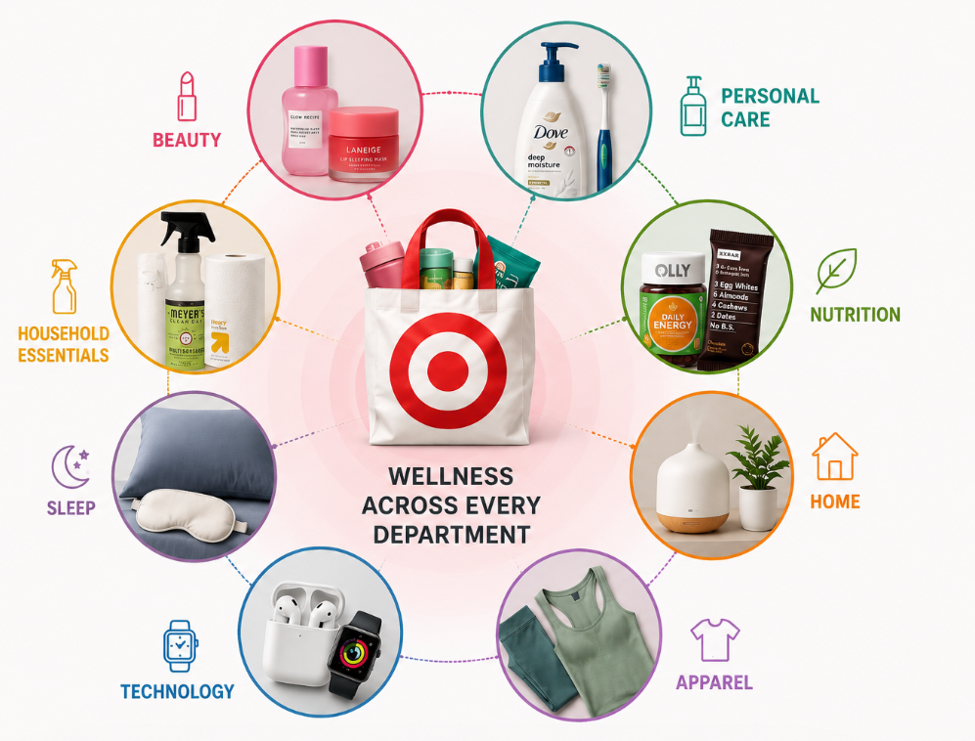
That broader framing matters because Target is trying to create a more connected lifestyle ecosystem that encourages cross-category discovery and larger baskets.
In many ways, wellness helps Target reconnect with the aspirational discovery-driven shopping experience that historically differentiated the brand from other mass retailers.
Kroger: From Clinics to Lifestyle Wellness
Kroger’s recent moves highlight an important shift happening across retail wellness strategy.
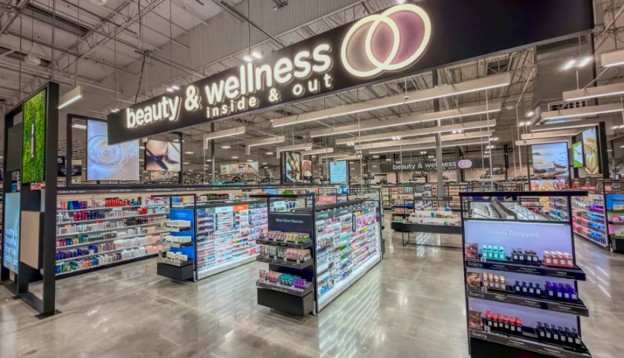
For years, many retailers approached wellness through healthcare delivery models including in-store clinics and medical services. But increasingly, retailers are realizing consumers may engage more naturally with wellness through everyday lifestyle categories rather than clinical environments.
Kroger’s recent decision to close a number of Little Clinic locations while simultaneously investing more aggressively in beauty and wellness merchandising reflects that broader evolution.
According to WWD, Kroger is redesigning beauty and wellness departments, expanding assortments, and bringing in trend-driven and viral brands to create a more discovery-oriented experience.
That shift is significant.
Rather than positioning wellness primarily through healthcare services, Kroger is increasingly embedding it into categories consumers already browse regularly. The strategy makes wellness feel more approachable, habitual, and integrated into everyday shopping behavior.

At the same time, Kroger continues expanding wellness-oriented experiences through initiatives like its Wellness Tour and in-store wellness activations, reinforcing the idea that retailers increasingly want wellness woven into the broader shopping journey rather than isolated in a clinical corner of the store.
Ulta Beauty: The Blurring of Beauty and Wellness
Beauty may be one of the clearest examples of wellness expansion.
Ulta continues evolving beyond traditional cosmetics into areas that intersect with self-care, emotional wellbeing, and lifestyle rituals. Wellness-oriented beauty, ingestibles, stress-support products, and self-care positioning are becoming increasingly common throughout the category.
Importantly, the experience feels connected both digitally and physically.
Consumers may discover wellness products online through content, recommendations, or influencer partnerships, then continue that journey seamlessly in-store through merchandising, education, and trial.
That omnichannel consistency is becoming increasingly important as consumers move fluidly between physical and digital retail environments.

Annette is skilled at identifying growth opportunities and successfully guiding products from concept to launch. At Compass, she advises leading brands and category disruptors in the health & wellness, personal care and digital health sectors.
See All Works